On December 18, Dune: Part Three hits theaters — the finale of a trilogy Denis Villeneuve has spent six years making. IMAX 70mm tickets at nineteen theaters sold out in minutes back in April. A good moment to work out who this man is and what of his to watch, if you know him only for the sandworms.
The short version. A French-Canadian from the small town of Bécancour, he started out making French-language films for a Quebec audience; at fifty-eight he directs the most expensive science fiction in theaters. His style has barely changed in almost thirty years of work. The budgets have.
The method
Villeneuve is easy to recognize by a single frame, and that's no accident — it's a set of very specific choices he repeats from film to film.
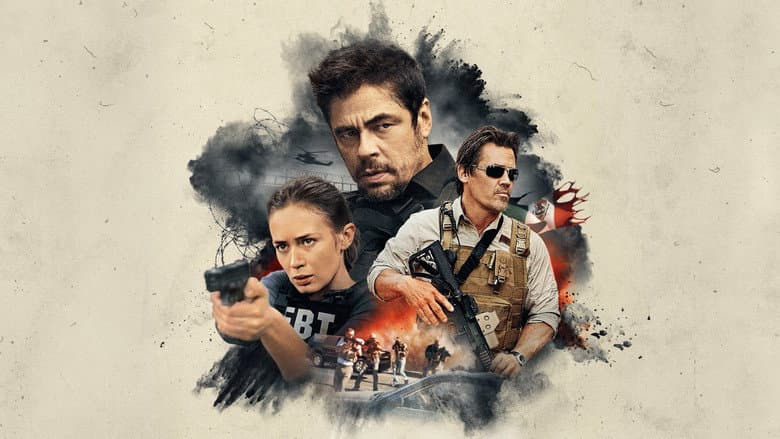
A person against the scale. Every one of his films has a shot where the character takes up a tenth of the frame and the rest is given to emptiness: desert, fog, concrete, water. An ornithopter beside a sandworm in Dune. A helicopter approaching the ship hanging over a Montana field in Arrival. The giant statues of an abandoned Las Vegas in Blade Runner 2049. It isn't decoration — it's a way to state the conflict in a single frame: the human here is smaller than the thing they're dealing with.
Silence instead of lines. He cuts dialogue to the minimum and fills the pauses with sound and image. First contact in Arrival is almost wordless: people in hazmat suits, an echoing chamber, an inkblot symbol on the glass. Enemy ends on a shot with no words at all. He has put his position more bluntly than most:
Honestly, I hate dialogue. Dialogue is for theater and television. I don't remember movies for a good line — I remember them for a strong image.
— Denis Villeneuve, The Times, February 2024
One place, one color. He colors the whole film, not the scene. In Sicario the border is burned down to beige dust while Phoenix is handed over to cold blue. Enemy is run entirely through a yellow filter that makes Toronto look sick. In Blade Runner 2049 a turquoise Los Angeles gives way to the orange haze of Vegas, and the switch between them works like a change of chapter. His most radical choice came in Dune: Part Two: the exterior scenes on Giedi Prime are shot in infrared black-and-white, so the Harkonnen sun turns the arena into an X-ray.
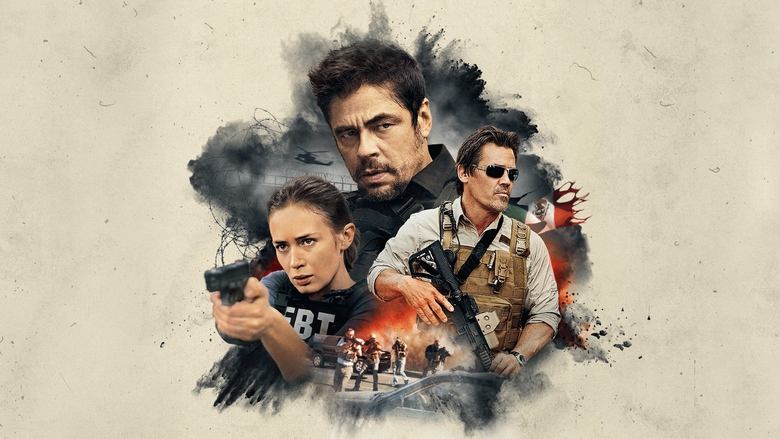
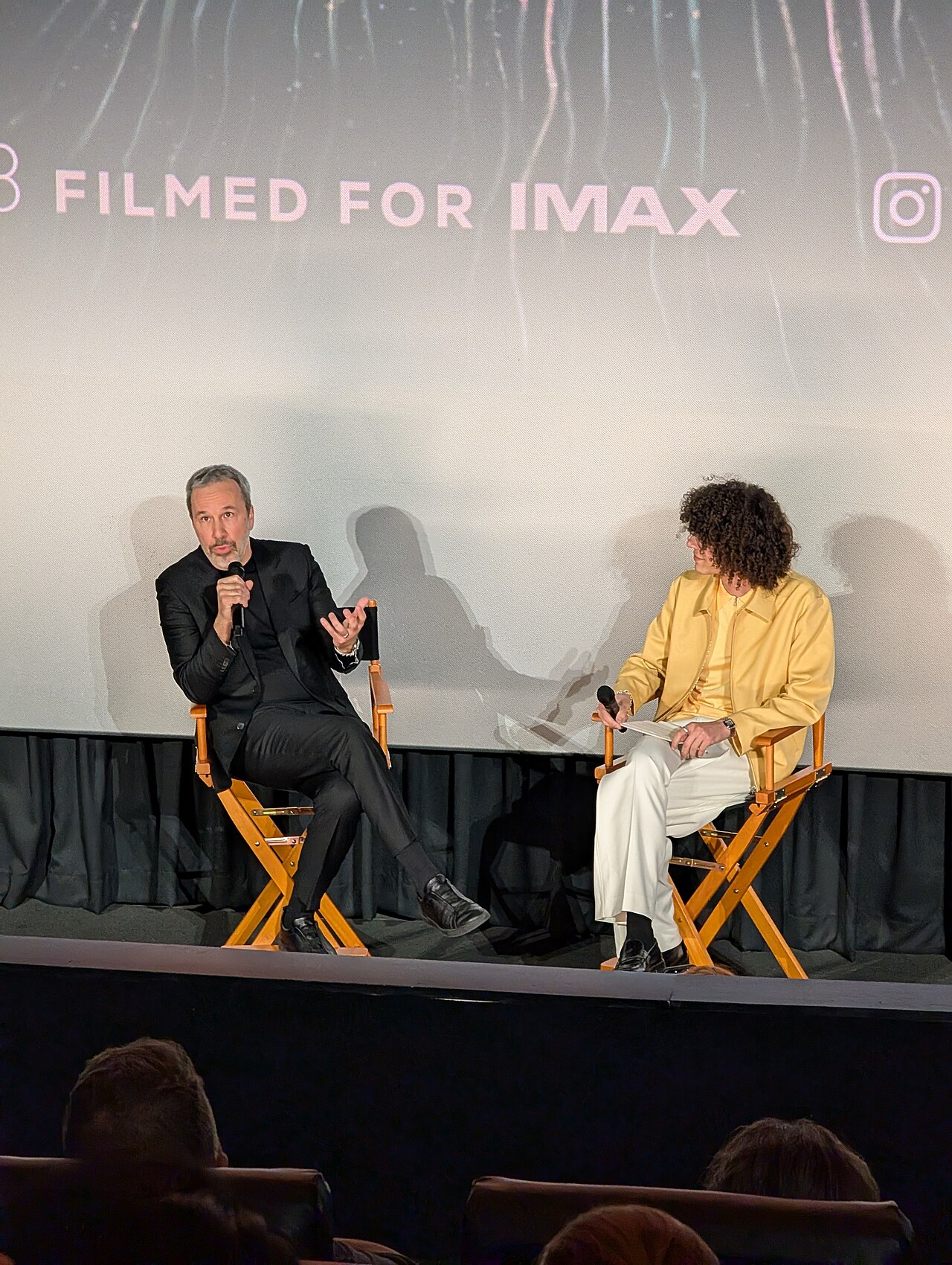
You know exactly as much as the hero. Sicario is built so that FBI agent Kate Macer doesn't understand what operation she's part of, and we're right there with her. The discomfort of the film isn't a side effect, it's the design: information is handed out in portions and always late. Arrival is assembled on the same principle, except what's hidden from you there isn't the point of the mission but the structure of the telling itself.
Real desert, real sets. The Arrakis of the first Dune is Jordan's Wadi Rum; the interiors of three planets were built as physical sets at Origo Studios in Budapest. Villeneuve designed the ornithopters with storyboard artist Sam Hudecki, taking dragonflies as the starting point, and they were built in metal. He worked the same way with Deakins on Blade Runner 2049: the light was set on the stage, not painted in afterward.
Sound as pressure. The descent into the smugglers' tunnel in Sicario is shot through night vision and thermal imaging, with a low pulsing drone by Jóhann Jóhannsson laid over it that makes you physically heavy in your seat. Zimmer does the same in Dune, only he builds the sound from invented instruments and female vocals. Music in Villeneuve doesn't work as background but as the weather the character is standing in.
Recurring themes
In story terms he's been making one film for twenty years. A hero lands inside a system built more intricately than they can grasp, and tries to survive in it. Kate Macer inside an interagency operation on the Mexican border. The linguist Louise Banks before a ship whose language breaks her sense of time. The replicant K, who investigates a case and finds himself inside it. Paul Atreides inside a prophecy written for him long before his birth. The genre and the budget change; the question stays the same: how much of you is left when the machine is finished.
The second constant is a woman at the center of a male construction. Macer in Sicario is the only person in the room asking about the rules. Banks in Arrival is set against the military, who want to solve the problem by force. Chani in Dune: Part Two got a role she doesn't have in the book: there she's devoted to Paul, while in the film it's she who says out loud that the prophecy is a Bene Gesserit invention, designed to make the Fremen easier to control.
The third is the absence of comfort at the end. He doesn't leave you feeling that everything resolved. Which is why his films work badly as background and well as a conversation the next day.
Three doors: where to start
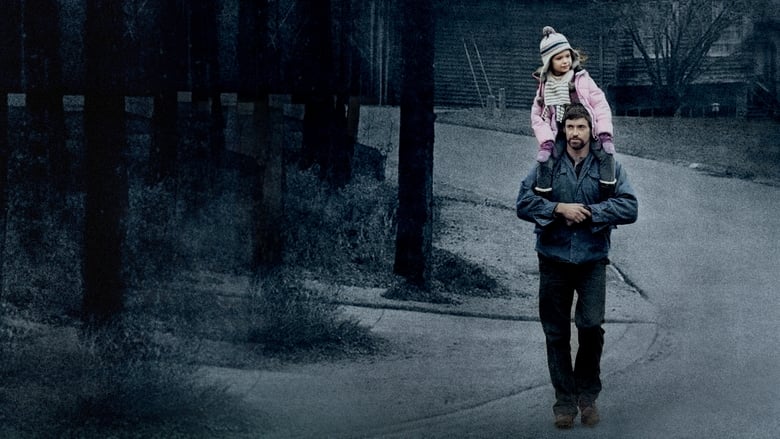
If you like bleak detective stories — Prisoners. Two girls go missing; the father of one stops waiting for the police and takes the case himself. Hugh Jackman and Jake Gyllenhaal, two and a half hours of grey rain shot by Roger Deakins. The easiest way in: the genre is familiar, the methods are already Villeneuve's. If it lands, we have a list of films like it.
If you want science fiction that leaves you sitting in silence — Arrival. Twelve alien ships hang over the Earth; a linguist is asked to talk to them. The film made 203 million dollars even though its main action is a woman parsing an alien grammar. Eight Oscar nominations, and the only directing nomination of Villeneuve's career.
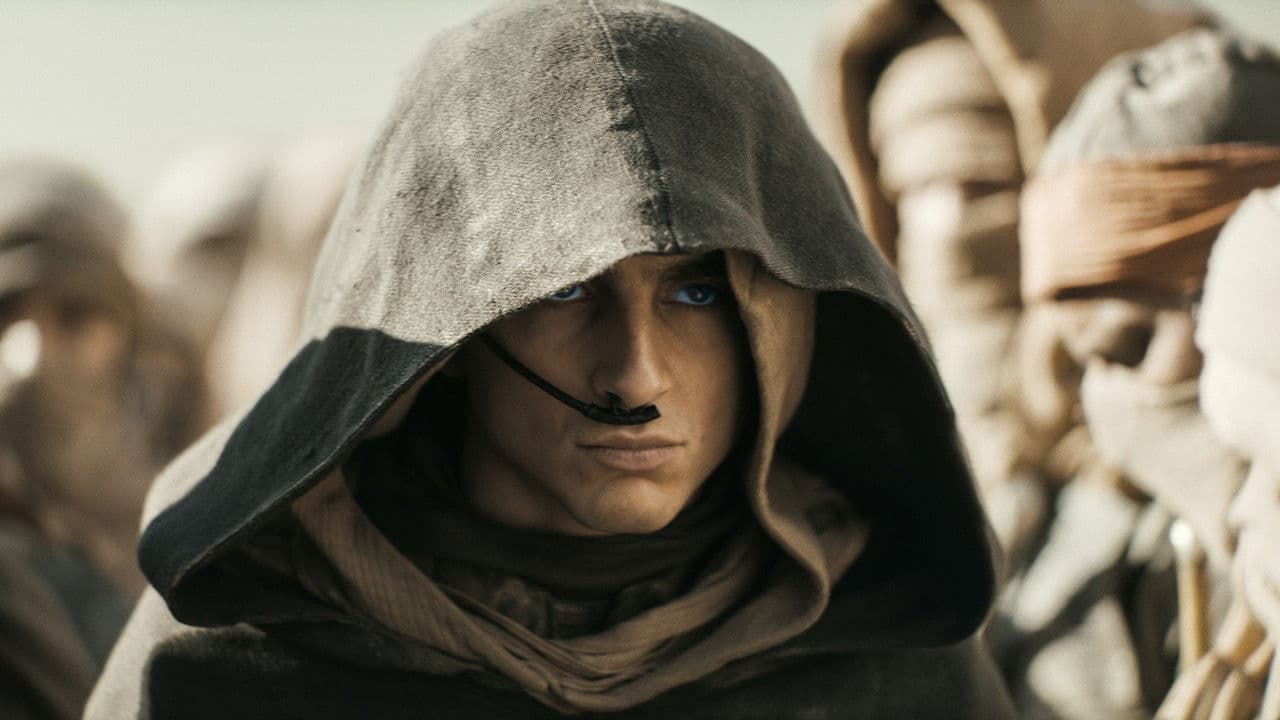
If you're ready for big and slow — Dune. 411 million at the box office, six Oscars out of ten nominations. Watch it on the biggest screen you can reach.
There's one more door, for anyone who wants to understand what he was loved for before any of the Hollywood years. That's Incendies: twins open their mother's will and travel to the Middle East to find the father they believed dead. An Oscar nomination for Best Foreign Language Film and an 8.1 on TMDB, higher than any of his blockbusters. Fair warning: there's a turn in it after which the film won't let you go for days.
A route through the filmography
Quebec, before Hollywood
August 32nd on Earth and Maelström — the debut and the second feature, both in French, both about a woman after a catastrophe. They’re worth watching once you’ve already fallen for the rest: the methods are still only being felt out, but you can see where everything grew from.
Polytechnique is a reconstruction of the 1989 massacre at Montreal's École Polytechnique, when a gunman shot fourteen women dead. Villeneuve shot it in black-and-white on purpose, to keep blood off the screen, and in Quebec the film caused a scandal anyway: the wound was too fresh. It's his hardest work and, at the same time, the first where you can see the future director of Sicario — the same cold distance from violence.
Incendies is an adaptation of a play by the Lebanese-Canadian playwright Wajdi Mouawad. The film after which Hollywood called.
The dark American phase
Prisoners and Enemy came out in the same year, 2013, with Gyllenhaal leading both, and turned out to be complete opposites. The first is a dense genre thriller you can recommend to anyone: an abduction, an investigation, an ethical dead end, all of it legible. Enemy, a loose retelling of Saramago’s The Double, has no intention of being legible. Ninety minutes of yellow haze about a professor who spots his own copy in a forgettable movie, and a final shot that Reddit is still taking apart.
Sicario is the first of his films where politics moved to the front. The screenwriter Taylor Sheridan later spun that register into a whole line of his own films — Hell or High Water and Wind River (we gathered films like these separately). Sicario itself got a sequel, Sicario: Day of the Soldado, but Villeneuve didn’t direct it, and you feel the difference from the opening minutes.
Science fiction
Arrival is based on Ted Chiang’s novella Story of Your Life. Villeneuve chose the cinematographer for the job: Bradford Young can shoot in natural light, which is why the aliens in the film look documentary rather than like a ride.
Then Blade Runner 2049 — a sequel no one asked for that came out better than it had any right to. 88% from critics on Rotten Tomatoes and 81 on Metacritic, an A− CinemaScore from audiences, and a flop at the box office: 267 million against a budget as high as 185 and a break-even around 400 million. Ridley Scott, who directed the original, blamed the length and the slow pace. Four years later Villeneuve made an even slower and longer film about a desert, and it made 411 million. Sometimes it isn’t about the film but about whether the room is ready for it.

Dune
The first part in 2021, the second in 2024 (seventh for the year at the box office, 145 million of it from IMAX screens alone), the third in December. If you start with Dune, watch them back to back and in a theater: it’s one film cut into three parts, and the first breaks off exactly halfway.
The regular team
Villeneuve has worked with the same people for years, and half the effect is their doing.
Roger Deakins shot Prisoners, Sicario and Blade Runner 2049 for him. He won his first Oscar for the last of those — on his fourteenth nomination, after more than twenty years without a single statuette. Arrival was shot by Bradford Young, the first Black cinematographer nominated in the category. The first two Dunes were Greig Fraser, also the eye behind the Pattinson Batman and Rogue One. The third was shot by the Swede Linus Sandgren, who has an Oscar for La La Land and, amusingly, No Time to Die on his résumé.
The music of the early years was written by the Icelander Jóhann Jóhannsson: Prisoners, Sicario, Arrival. He started Blade Runner 2049 too, but midway Villeneuve decided to turn the sound in another direction and brought in Hans Zimmer. In February 2018 Jóhannsson died; he was 48. Zimmer has scored all of Dune since and won an Oscar for the first part.
The producer of the recent films is Tanya Lapointe, Villeneuve's wife. She described her role briefly: an extension of his brain.
The case against Villeneuve
There's no point pretending everyone loves him. The complaints repeat from review to review and go roughly like this.
Too serious. There’s almost no humor in his films, and the solemnity of the register wears a lot of people out. IndieWire’s review of Dune called the film a lifeless “spice opera” — and it wasn’t a lone jab: Dune sits at 83% on Rotten Tomatoes, the lowest among his big films, and part of the press wrote plainly about length and boredom.
Form ahead of content. The complaint is that his frame is always stronger than his scene, and the beauty runs idle where drama is what’s needed.
The defense isn't empty either. The slowness isn't a side effect but a method: he says openly that he makes cinema out of image and sound, and that kind of cinema needs time per frame. Audiences, tellingly, argue with the critics in ticket sales and scores: Dune has an A− CinemaScore and 411 million at the box office.
Our position is this. Villeneuve is a director you can't put on in the background, and if what you want is warmth, jokes or a fast plot, you'll come away disappointed. But if you're ready to give a film three hours of attention with no phone, few directors working now will give you more back.
Dune: Part Three, and what comes after
The third part is based on Dune Messiah, Frank Herbert’s second book, where the author set out to explain to readers that Paul is not, in fact, a hero. The action is moved 17 years past the end of the second part; in the book the jump was 12.
The cast grows. Robert Pattinson plays the shape-shifting conspirator Scytale. Anya Taylor-Joy plays Alia, Paul’s sister. Florence Pugh returns as Princess Irulan.
It was shot in Budapest and in the Liwa desert outside Abu Dhabi, on 65mm film with IMAX inserts. Villeneuve says he doesn't consider the film the end of a trilogy and made it as a standalone story.
After Dune he's off to James Bond: Amazon MGM handed him the franchise's 26th film with an eye on 2028. Villeneuve said he grew up on Bond, watched it with his father starting from Dr. No, and that for him it's sacred ground. A detail for the collection: he was already offered No Time to Die back in 2021 and turned it down for Dune. Also on the announced pile are a Cleopatra for Sony and a Rendezvous with Rama from the Arthur C. Clarke novel, but so far those are only contracts.
The bottom line
Villeneuve dragged slow auteur cinema into the multiplex and made it pay for itself, which few people manage. The Academy, though, still behaves as if the films direct themselves: eleven Oscars for his pictures and not one for him personally, with a single directing nomination across his whole career. Start with Prisoners or Arrival, work your way up to Dune, and you’ll be ready by December 18.
Tired of picking films by other people's ratings?
MyKinoList predicts your own. Start by rating a few films you've already seen.